
Custom Web Applications Built for Businesses Where Failure Isn't an Option
We're Australia's first and only Premier Laravel Partner. We design, build and scale custom web applications for businesses that have outgrown off-the-shelf platforms.
Trusted by Chemist Warehouse, HelloFresh, Youfoodz and Absolute Domestics
certified conformance
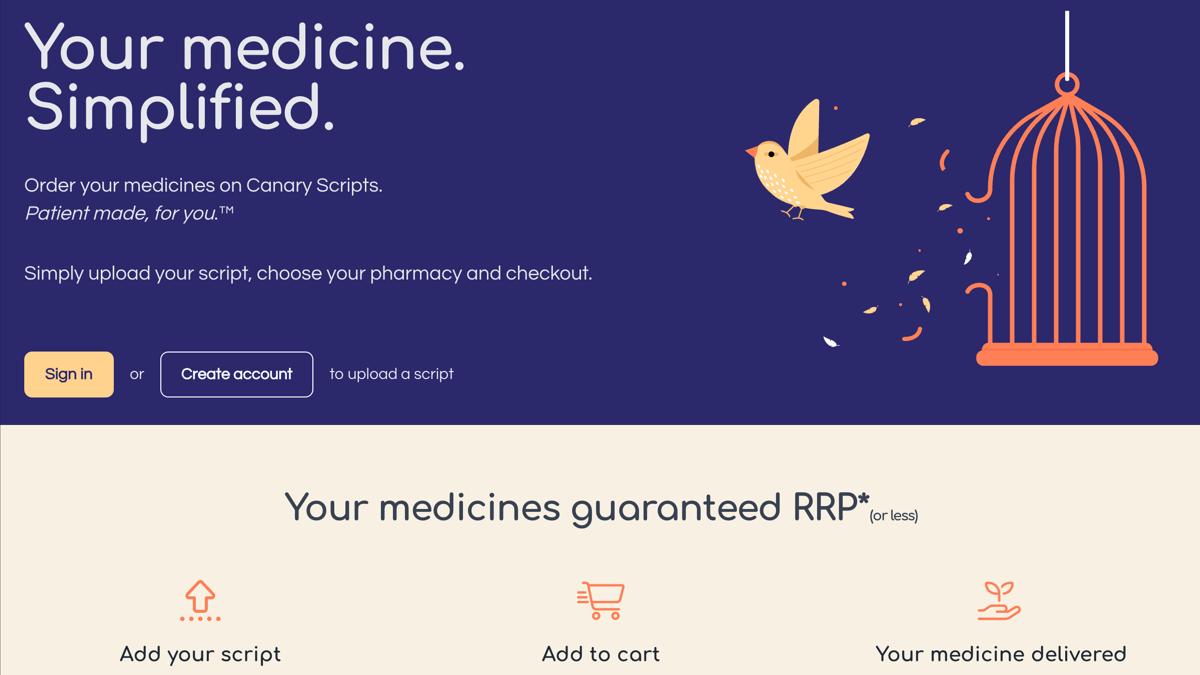
Canary
A pharmacy platform with government-approved production access to Australia’s national e-prescription network.
 Built with
Laravel
Built with
Laravel
growth since launch
Nourish'd
A custom meal delivery platform managing subscriptions, funded-care billing, fulfilment, and operational reporting across three customer segments.
Built with
Laravel
certified conformance
Canary
A pharmacy platform with government-approved production access to Australia’s national e-prescription network.
Built with
Laravel
growth since launch
Nourish'd
A custom meal delivery platform managing subscriptions, funded-care billing, fulfilment, and operational reporting across three customer segments.
Built with
Laravel










Your platform is the ceiling, not the floor.
There's a point where Shopify, WordPress, or whatever you started on stops being a foundation and starts being a constraint. Here's what it looks like in practice.
Your team is managing the business in spreadsheets
Because the platform can't do what the business actually needs. So they improvise - and every improvisation compounds.
You pay a developer every time you need something "simple"
Pricing changes, checkout tweaks, product rules - nothing is self-serve. The platform that was supposed to make things easier has become a dependency.
Your integrations hold everything together - until they don't
Zapier breaks. Webhooks fail silently. One Monday morning something critical isn't talking to something else, and you don't know why.
If two of these sound familiar, you've already outgrown your current setup.
Custom software solves it - if it's built right.
Moving off a platform gives you the freedom to build what your business actually needs. But custom development has its own failure modes. Here's what separates the ones that work from the ones that don't.
Most agencies
get this wrong

The agency disappears after launch
You get a handover document and a wave goodbye. When something breaks six months later, you're on your own.
The scope balloons and the budget follows
What started as a three-month build becomes a twelve-month money pit. Every "small change" costs another invoice.
The code only one person understands
Clever shortcuts that make sense to the developer who wrote them, and no one else. The moment they leave, you're stuck.
It works - until traffic hits
Built and tested in a vacuum. Your biggest campaign day is also the day you find out the infrastructure wasn't ready for it.
These aren't rare edge cases. They're the default outcome when you pick the wrong team.
How Pixel
does it differently

We stay. Seriously.
Most of our clients have been with us for years. We treat every project as the start of a long relationship, not a handover to close a ticket.
Fixed scope. No invoice surprises.
We define what we're building before we build it. If something changes, we talk about it openly - not after the fact on an invoice.
Every feature ships with automated tests
Before any code goes live, hundreds of automated checks run. New features can't accidentally break what already works - problems get caught before your users do.
30+ platforms. Zero catastrophic failures.
We've been at this long enough to have seen every edge case. Our infrastructure is built to handle the moments that matter most.
See how we work

Custom web applications built for how your business actually works.
Pixel designs and builds Laravel applications for businesses that have outgrown off-the-shelf tools, manual workarounds, and disconnected systems.


Website Design
Conversion-focused interfaces built in Figma - from marketing sites to complex web applications, designed to perform as well as they look.


Website Development
Laravel web applications built to handle real business complexity - custom admin systems, e-commerce platforms, and everything off-the-shelf can't touch.

Integrations & Automation
ERP connections, third-party APIs, AI tooling, and custom workflows - we make your systems talk to each other so your team stops doing it manually.
Work that proves the point.
A selection of the custom web applications we've designed, built, and launched for clients across Australia.
Canary
A pharmacy platform with government-approved production access to Australia’s national e-prescription network.
certified conformance
The only pharmacy platform in Australia with production-level access to the national e-prescription network, approved by the Australian Digital Health Agency after two to three months of rigorous government review. Patients receive a script token from their doctor, enter it into Canary, and their chosen pharmacy fulfills it in real time — every transaction audited end to end. Eight months after launch, we transformed the platform into a licensed SaaS product. Any pharmacy can now deploy their own branded instance, own their patient relationships, and run on Canary's conformance without building it themselves.
Nourish'd
A custom meal delivery platform managing subscriptions, funded-care billing, fulfilment, and operational reporting across three customer segments.
growth since launch
Nourish'd does not run a standard fixed-SKU subscription model. Each billing cycle, the platform allocates meals from the active weekly menu based on subscriber preferences, dislikes, stock availability, and product rotation rules.
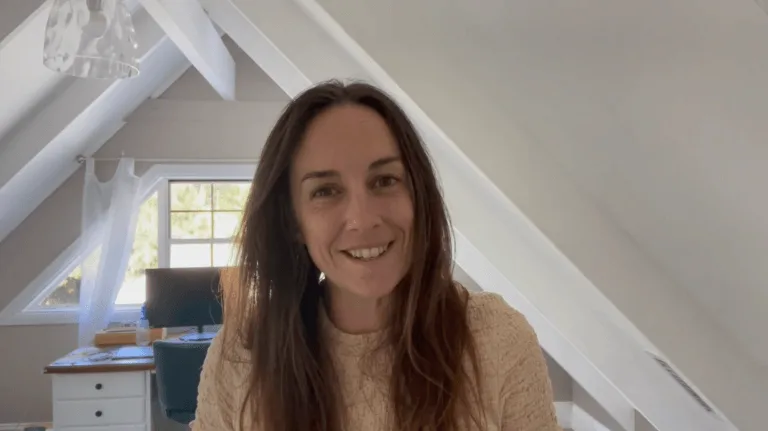


Joel and the Pixel team are constantly coming to us with recommendations for improvement and innovation based on research, experience, and best practice, and have been instrumental in bringing to life the vision I have for my company.
Abbey Cameron
Founder, Nourish'd

The Method Behind the Work
Every project above followed the same five-step process. Here's exactly what that looks like - from the first call to ongoing support.

Discovery Call
It starts with a conversation. We spend 20 minutes understanding your business, what's working, what's broken, and whether there's a genuine fit. No obligation, no pitch - just an honest discussion about your goals and constraints.

Design & Architecture
We translate discovery into a complete blueprint: system architecture, database models, API contracts, and high-fidelity UI designs. Nothing gets built until every stakeholder has signed off - no surprises mid-build.

Development & Testing
Our Laravel engineers build the backend systems, integrations, and custom logic that power your application. Every feature ships with automated tests and a security review - we don't push to production until the full suite passes green and the code is clean.

Go Live
Deployment day is a non-event when it's done right. We handle DNS, SSL, CDN warm-up, and monitor every metric at launch. Our team stays on-call in the launch window so your users never notice anything except a fast, polished product.

Momentum
A monthly agreement that keeps your application evolving. New features, performance improvements, security patches, and priority support with a guaranteed 2-hour response - we keep building so your product never stands still.
Platform Strategy Call
Design & Architecture
Development & Testing
Go Live
Momentum
Products we built and use ourselves
We don't just build for clients. These are live products we designed, built, and run on the same stack we use for everything - proof that the approach holds up in production.
View all products →
Product 01
InternalFoundry
Our internal bootstrap framework - pre-built modules and production-ready features we assemble from to start every client project fast.
Product 02
↗Pulsewise
Website monitoring that tells you what's broken before your customers notice.
Product 03
↗Paper
All-in-one platform for creative agencies - clients, projects, proposals, team.
Trusted Partners
Official partners with the platforms that power serious web applications - Laravel, AWS, Stripe, Xero, and Cloudflare.




Got questions?
We've got answers.
Couldn't find the answer you were looking for? No worries, get in touch with us.
Contact Us
What is custom web application development?

Custom web application development is the process of building software from scratch — purpose-designed for your specific business, rather than adapting an off-the-shelf product to fit.
Unlike platforms like Shopify, WordPress, or any SaaS tool, a custom web application has no ceiling. Every feature, every workflow, and every integration is built around how your business actually operates.
The businesses that benefit most are those where the standard platforms have hit a hard limit — because their business model, compliance requirements, or operational complexity requires something that simply doesn't exist yet.
How much does a custom web application cost in Australia?
Custom web application projects at Pixel typically start from $30,000 for a focused MVP, with full-scale platforms ranging from $60,000 to $200,000+ depending on scope and complexity.
Every project is scoped before pricing is confirmed. We produce a detailed fixed-price proposal — scope, deliverables, timeline, and cost — that is signed off before work begins. There are no open-ended estimates or surprise invoices.
The right framing on cost: the risk of building the wrong thing, or building it in a way that requires a rebuild in 18 months, almost always costs more than doing it properly the first time.
How long does it take to build a custom web application?
A focused MVP typically takes 3–5 months from scoping to launch. More complex platforms — multi-sided marketplaces, systems with compliance requirements, or large-scale SaaS products — typically run 6–12 months.
Timeline is driven by scope, not by pace. We define exactly what is being built before work starts, which means timelines are predictable rather than aspirational. We don't start builds until the scope is locked.
What's the difference between a custom web application and an off-the-shelf platform?
An off-the-shelf platform (Shopify, WordPress, Webflow, any SaaS) is built for the average use case. It works well until your business needs something the platform wasn't designed to do — at which point you're either working around the platform's constraints, paying for workarounds, or hitting a hard ceiling.
A custom web application is built for your specific use case. It has no ceiling, no licensing limits, and no vendor dependency. You own the code, control the roadmap, and can build anything your business requires.
The crossover point is usually when you're spending significant time or money forcing a platform to do something it wasn't designed for.
When does a business need custom software instead of Shopify or WordPress?
The clearest signals are: your business model requires logic that no existing platform supports natively; you're operating in a regulated industry with compliance requirements at the application level; you're building a two-sided marketplace or B2B platform; or you've outgrown your current platform and a migration to another off-the-shelf product won't solve the underlying constraints.
If you're asking the question, it's often because you've already felt the friction. A discovery call with Pixel takes 30 minutes and will give you a straight answer on whether custom is the right move.
How can I get a quote for a custom web development project?
The first step is a discovery call — a 30–45 minute conversation where we get to understand your business, what you're building, and whether Pixel is the right fit.
After the call, if there's a clear fit, we move into a formal scoping process. We'll produce a detailed proposal covering scope, deliverables, timeline, and a fixed price before any work begins.
You can book a call directly from this page, or reach us at hello@wearepixel.com.au.
What's the difference between a web app and a website?
A website is primarily informational — it presents content to visitors. A web application is interactive software that runs in a browser: it processes data, responds to user input, enforces business logic, and often connects to external systems.
Most businesses start with a website. The need for a custom web app emerges when the business requires workflows, calculations, user accounts, or integrations that a static site or CMS can't support.
The line blurs in practice — a modern e-commerce platform is a web app, not a website — but the distinction matters when you're deciding what to build and with whom.
Is PWA still a thing?
Progressive Web Apps (PWAs) are still a valid approach for specific use cases — particularly where you want a mobile-app-like experience without the cost of native iOS/Android development.
That said, their relevance has narrowed. iOS support for PWAs has historically been limited compared to Android, and for most businesses the right answer is either a well-built responsive web application or a dedicated native app — not a PWA as a compromise between the two.
Where PWAs still make sense: offline-capable tools, high-frequency internal apps, and situations where app store distribution isn't required. If you're weighing this up, it's worth a direct conversation rather than defaulting to the technology.




Still weighing it up? That's what strategy calls are for.
Find out whether custom Laravel software is the right next move, or whether there's a simpler fix.